THE PEOPLE’S CHOICEA NEW CENTURY. A FOUNDING PROMISE.EST. 1800

A circular to the citizens of the United States

Jefferson 1800.

A new century. A founding promise.

A MESSAGE TO THE REPUBLICVIRGINIA · MDCCC

For President of the United States

Thomas
Jefferson.

Let liberty govern.

A free press. A frugal government.
A republic worthy of its founding promise.

Discover the man
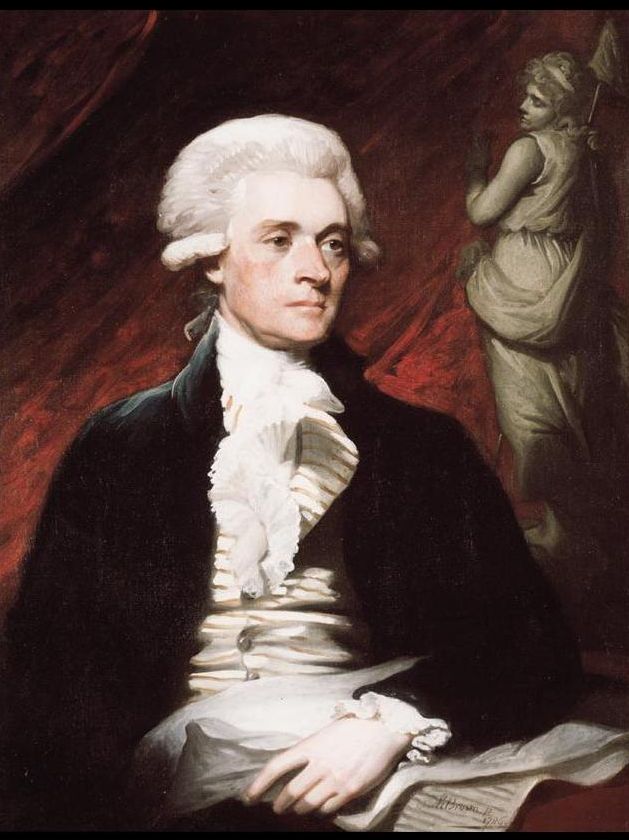
Thomas Jefferson in a brown coat and white neckcloth, painted by Mather Brown in 1786
MATHER BROWN · 1786
FOR LIBERTYTJMDCCC
PRINCIPLE BEFORE POWER.JEFFERSON FOR PRESIDENT.
Scroll to break the seal
I. The founding promise1776 — 1800

Independence was won.
The work of liberty is never finished.

Power is borrowed.
Liberty is yours.

Read our two commitments

We did not cast off a king to place our liberties at the mercy of a president. Yet a printer may now face prosecution for words against those in power, and the cost of government presses upon the citizen.

This election asks what kind of republic we shall be. One that fears the judgment of its people—or one that trusts it?

Choose Thomas Jefferson: a drafter of independence, a defender of conscience, and an experienced servant of the nation.
The man. The principles. The choice.

The case,
in three papers.

Three chapters. One case for liberty.
The campaign printing officeRichmond, Virginia · 1800

Good principles.
Put into print.

Before a message could travel, someone had to set the type. Choose a cause, make your broadside, and carry the argument beyond this page.

A classroom reconstruction. The campaign language is original, not a quotation or an authentic historical broadside.

To the citizens of the United States

JEFFERSON 1800

Let the
people judge.

LIBERTY OF THE PRESS

A free republic must bear the voice of its critics. Let reason answer the printer; let no prison silence him.

THOMAS JEFFERSON
For President of the United States

PRINCIPLE BEFORE POWER · MDCCC

Educational reconstruction · Original campaign copy

The choice of a new century

A republic belongs
to its people.

A vision for the republic
Behind the broadsheet

The historical record.

Campaign language, with evidence behind it. This is a modern school project imagining a Jeffersonian campaign in 1800. The persuasive prose is original, not a collection of historical quotations.

A necessary distinction. Jefferson’s advocacy of liberty coexisted with his enslavement of people. Women, enslaved people, Indigenous peoples, and many other residents were excluded from political power. This site reconstructs an argument; it does not erase those contradictions.
  1. 01

    The Declaration, 1776

    Jefferson was the principal drafter; the Committee of Five and Congress participated in its creation and revision.

    National Archives
  2. 02

    Public service & diplomacy

    Minister to France, 1785–1789; first Secretary of State, 1790–1793. Vice President from 1797, serving during the election of 1800.

    Office of the Historian, U.S. Department of State
  3. 03

    Virginia Statute for Religious Freedom

    Drafted in 1777; enacted in 1786 with James Madison’s leadership. It protected religious liberty, rather than reestablishing a state church.

    Thomas Jefferson’s Monticello
  4. 04

    A letter before the election

    Jefferson to Elbridge Gerry, January 26, 1799. The basis for this reconstruction of his positions on economy, debt, a standing army, religion, and the press.

    Library of Congress · original manuscript
  5. 05

    The Alien and Sedition Acts

    Laws signed in 1798. The Sedition Act targeted specified false, scandalous, and malicious writings against the government, Congress, or President; truth could be offered as a defense.

    National Archives · original act and context
  6. 06

    Adams, taxation & the election

    The 1798 direct tax and defense expansion formed part of preparations for conflict with France. Adams also pursued a diplomatic settlement.

    Miller Center, University of Virginia
  7. 07

    The election of 1800

    Partisan conflict, the electoral process, and Jefferson’s vice presidency. Voting rules varied by state; this was not a modern nationwide popular vote.

    Miller Center, University of Virginia
  8. 08

    Portrait of Thomas Jefferson, 1786

    Mather Brown. National Portrait Gallery, Smithsonian Institution. Public-domain reproduction via Wikimedia Commons; displayed here with a sepia treatment.

    Wikimedia Commons · image record
  9. 09

    The direct tax of 1798

    Congress enacted a two-million-dollar direct tax to fund military preparations. Assessments covered houses, land, and enslaved people.

    National Archives
  10. 10

    Liberty & its contradictions

    Jefferson enslaved people throughout his life. The campaign’s rhetoric about liberty does not describe an equal society or excuse that contradiction.

    Thomas Jefferson’s Monticello

The two platform planks are reconstructed from pre-election views, not presented as an official 1800 party manifesto. No future presidential accomplishments are used as campaign credentials. Decorative seals and illustrations are original design elements, not historical artifacts.